

Aggressive trading of options in semiconductor stocks is creating a volatility differential that traders are using to maintain a bullish stance in the fastest-rising sector, while simultaneously hedging against risks in the broader market.
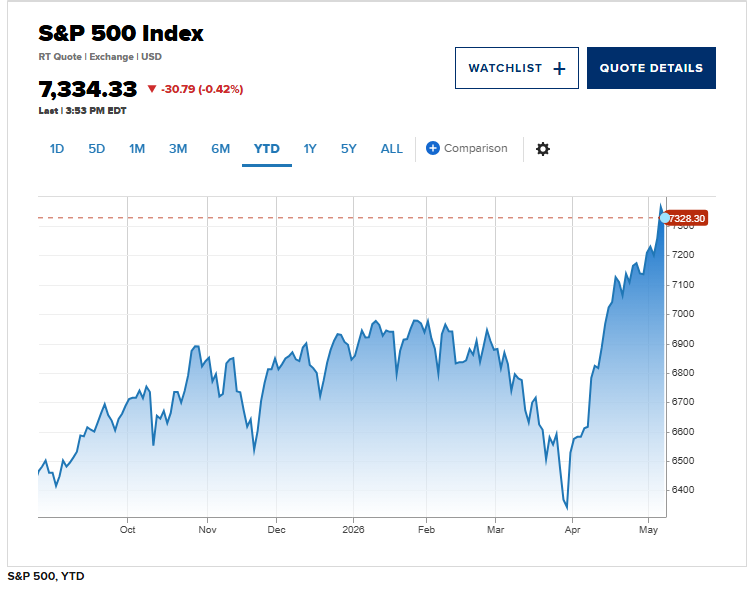
The operation is quite simple: sell downside protection on semiconductor stocks —where volatility is expensive— and buy downside protection on the S&P 500 —where it is relatively cheap—, given that this week the VIX index has touched its lowest levels in three months.
Here’s why this strategy is exceptionally attractive in the current situation.
The implied volatility of the VanEck Semiconductor ETF (SMH) is at 46, which is more than 2.5 times that of the S&P 500, where the Cboe Volatility Index (VIX) is trading around 17. Volatility often decreases as stocks gradually rise ; however, in the case of semiconductors—whose prices are experiencing a parabolic movement—volatility is increasing in tandem with prices.
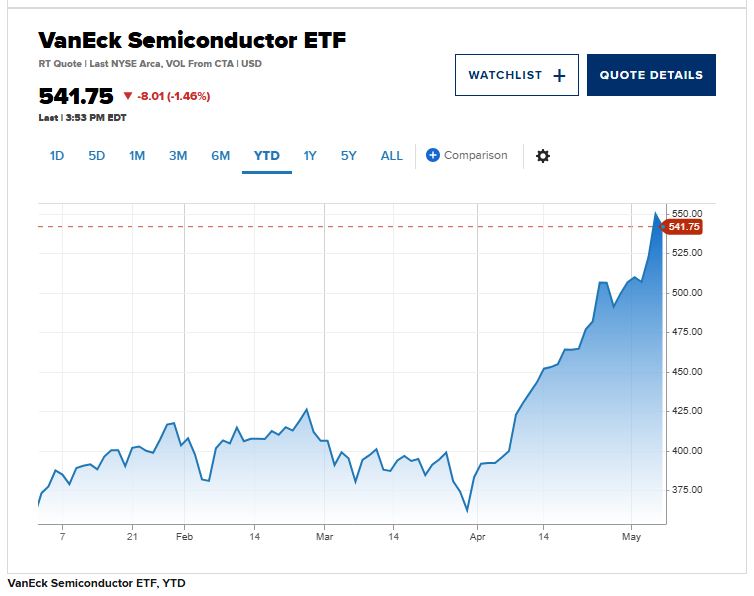
As a result, traders are redirecting some of that appetite for buying call options in the SMH toward selling put options: on Wednesday, more than five times as many put options were sold as were call options. While the outlook for the sector remains bullish, the specific objective of this strategy is to take advantage of the high premiums offered by these options.
The second part of the operation consists of using those proceeds to take a long position in volatility in the S&P 500, either through *put* options on the index or through *call* options on the VIX.
"Win-win"
“The premium you earn by selling put options will far outweigh any losses you might incur in the index, because even if the market continues its gradual upward trend, those S&P 500 put options won’t lose much of their value,” said Scott Bauer, CEO of Chicago-based Prosper Trading Academy. “It’s a massive volatility asymmetry; if there’s a pullback in the semiconductor sector, it presents an opportunity to buy back in at a lower price, whereas selling call options could result in a career-ending trade. It can certainly be a win-win situation.”
Wednesday’s intraday trading provided a perfect example of how both trades can be profitable simultaneously. Both semiconductors and the VIX hit lows around 9:20 a.m. CT, before experiencing a rally that held until the close of trading.